
“Something Yet to Learn: Thinking from Behind the Lectern”
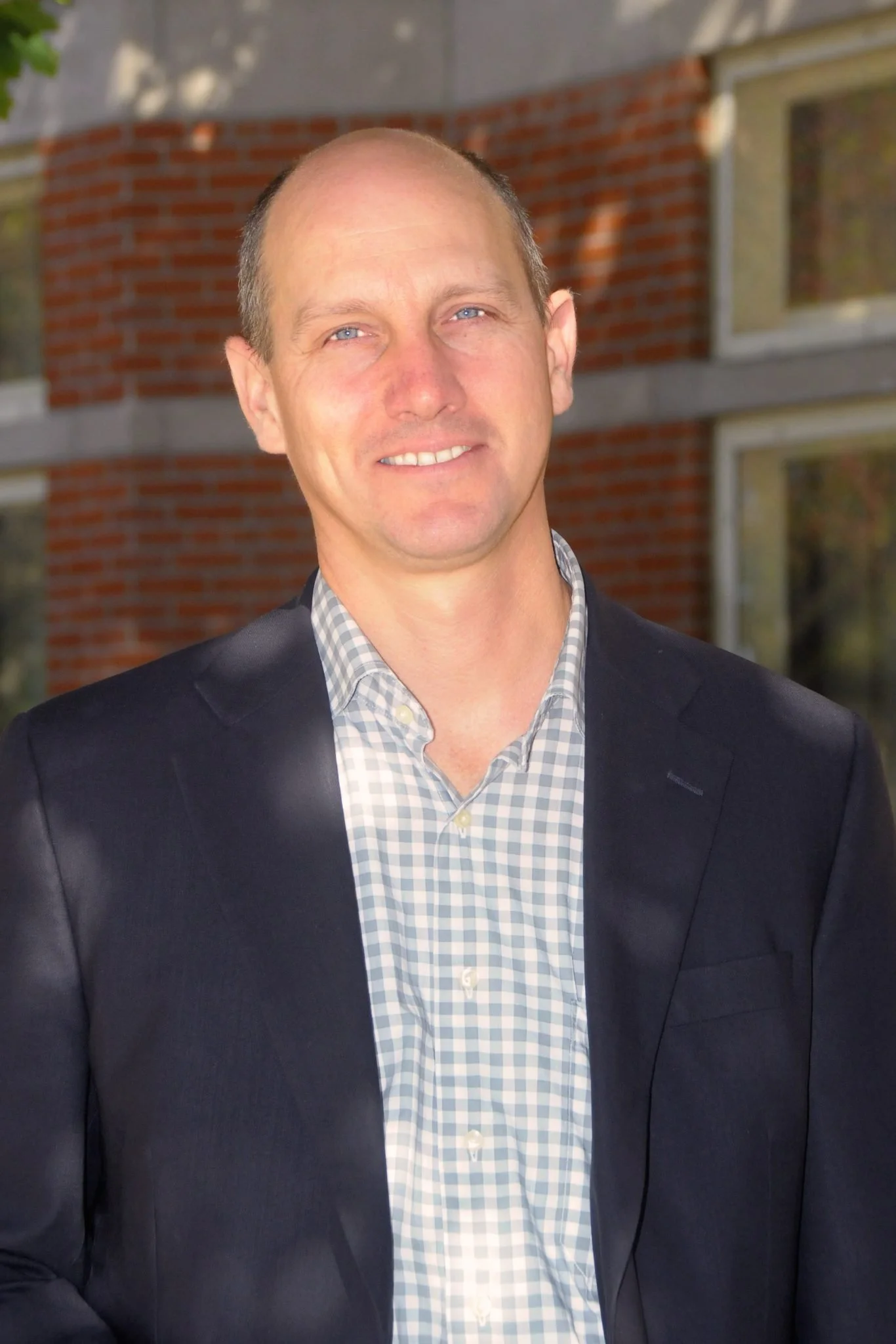
Robert Hoch
April 3, 2013 [i]
I.
As a theological educator, I live my day to day life not on the stage of the General Assembly, or even behind a pulpit, but behind a dinged-up lectern covered with an imitation-wood laminate. From that place, I talk with students about the great theological tradition, one that we cherish, student and teacher alike. “I am trying to create a learning environment,” I tell my students. I say it so often, I am sure they roll their eyes. Or maybe they see that my lofty goal surpasses my skills as a teacher. Fostering an environment of learning should keep us all humble, especially those who would teach. At the same time, I am not above taking a position, making an argument or challenging student positions. This, too, is part of learning. The professors I admired most in class were people who could do both and I suppose I try to imitate that model in my own life. In this capacity, I want to share two sides of my life as a theological educator, one being an argument for same-sex marriage using a liturgical document many Presbyterians will recognize, namely, the “Statement on the Gift of Marriage” in the Book of Common Worship. But I will also share an experience from a classroom in which no argument was made, but something more powerful was conceived, namely an opportunity for more robust listening and prophetic learning.The latter, I think, requires something of an explanation. According to Andrew Marin’s Love Is An Orientation, subjecting the sexuality question to an argumentation theory, pro or con, turns a learning opportunity into a bitter conflict. Even if you “win” the argument, he asserts, the listening and learning necessary to sustain authentic community get short-circuited.[ii] As a seminarian, I remember standing in a circle, singing in chapel, “We are all Gay, Lesbian, and Straight.” Looking back, I am glad I sang the song, but to be honest it took a while for me to catch up to the music. A well-intentioned decision had been made within the seminary community but the conversation lagged behind, at least as far as I could tell as a student.However, on the other side, now as a faculty person, it was ten years before we as a faculty and staff openly talked together about the question of LGBT sexuality and seminary life. Why would we not talk? It was certainly not for a lack of opinions on the subject – or any subject you care to name! Perhaps, it was just easier to decide not to decide, a decision in its own right, and at least as problematic. Some feared the conversation would tear us apart, that the delicate bonds holding us together as a faculty community would be cut. Denominational debates, not to mention the popular and political debates on LGBT issues, confirmed our reluctance: winning almost always means a certain kind of loss, often painful. Communities get seduced into believing they can achieve an “ideal” victory. In this ideal, there’s some kind of “golden” prize for the “winning” argument and the other side (presumably the “losers”) will see the rightness of the winning argument, and just as idealistically, declare an unambiguous surrender. Or, more likely, just leave. Once the desired decision is achieved, the questions prompted by the debate do a slow fade-out, almost disappearing, but not quite.Meanwhile, reality is just as pressing as ever: a young teen listens to talk radio in order to see if “Mike” who just “came out” is going to hell or not. Or perhaps someone comes out to his pastor and he gets a variation of “love the sinner and hate the sin” – and yet the world (and many in the church) conditions its hospitality on the lynchpin of his sexuality. Or perhaps a pastor to students is trying to decide who to invite to the marriage retreat potluck, dreading the angry student or the deep hurt and confusion that will inevitably find its way to his or her door, seminary policies on human sexuality notwithstanding.Or in class, an openly lesbian student articulates a sense of call that would please most evangelicals were it not for her sexuality which, while evident, is nevertheless a “secret” in terms of how she happens to “fit” or “not fit” into the life of the seminary. In one way or another, she’s told, Don’t ask, don’t tell. Her sexuality remains a footnote, the footnote never named, never acknowledged as a real and mysterious part of her identity, never received as a part of her journey to seminary, something she has struggled with, and something she has grown in and through, something that the machinery of national and denominational debate has either tried to deny or advance, and something she was courageous enough to share in a seminary classroom.These are not “imaginary” situations and they betray not just a grey area in “policy” but instead represent people with whom the church interacts on a daily basis, people who are not reducible to their sexuality but who, in the way of this particular argument, are seen almost exclusively through that sexuality, narrowly defined and through that definition either included or, more often, excluded.The church (or seminary) would perhaps like to live in an “ideal” world, but the world we are given is far from ideal, especially if by “ideal” we mean perfect clarity on who belongs and who doesn’t. If Matthew’s gospel is any indication, ambiguity and questions are mixed in together in almost equal measure with the gifts of bread and wine. But crucially, God in Christ gives bread and wine enough and more to live fruitfully, creatively, and generously in a world that God so loves. It is not that judgment is denied, or that sin does not exist, or that people don’t have real questions and uncertainties, but that God in Christ creates community through the gift of hospitality, prayerful questioning, and generous listening. Change isn’t simply assessed as right or wrong. We try to understand the nature of our ongoing transformation before we assess it. Discipleship, in short, is the way we live through the change wrought by Christ. This is why we are not to be anxious about separating the wheat from the tares – our vocation remains amid these things, lower to the ground, looking for Christ in the so-called “weed” of the cross.While “deciding” the questions surrounding LGBT sexuality (and by implication heterosexuality) properly belongs to the governing bodies of the church, I worry that an all consuming demand to decide – and all indicators suggest that the hour of decision has arrived in full force -- risks obscuring the metaphor of the church as a classroom of the Holy Spirit. Again, this is not to say the church community shouldn’t make decisions that are costly and carry deep ethical and theological implications. Being a church worthy of the name entails a decision to turn our face towards Jerusalem, in the full knowledge of the cost of discipleship. But, at the same time, there’s a journey to Jerusalem and beyond it: we are called to give tangible expression to the church community’s openness to dialogue, namely, its willingness to risk becoming a learning environment.
II.
What of decisions? Or argument? I certainly have an argument, though it may seem too conservative for some and too “revisionist” for others. For me, it simply felt interesting. During my years in the classroom, denominational liturgies often prove instructive, especially as they bring the theology of the church to life in the language of congregational worship. I personally enjoy the ground level entry liturgy provides for theological conversation. However, when arguments are made for change, the typical sources used consist of biblical texts, the historical tradition, as well as anthropology. By comparison, liturgy and hymnody, the language of the church on the Lord’s Day, seems less well-represented. I wanted to see if a liturgical text, in this instance the Brief Statement on the Gift of Marriage, could make a theologically coherent case for same-sex marriage.Typically, theologians view marriage through two or three closely related doctrines: the doctrine of creation, the doctrine of covenant, and the doctrine of discipleship. The latter two can be seen as closely related. My interpretation of marriage draws on my understanding of these doctrines and it further reflects the primary language of the church (the PCUSA) as it celebrates the Christian rite of marriage.At the heart of marriage is a theology of covenant, namely God’s pledge of faithfulness and companionship with the human being. This covenant also entails a commitment on our part, namely, faithful discipleship. More often than not, however, our faithfulness to God receives a mixed report, biblically and historically. The first expression of faithfulness will always be grounded in the language of 1 John 4:19: “We love God because [God] first loved us.” Theologically, God’s covenant with the human being reflects a freely chosen, love oriented decision, in that God the Creator joins God’s own divinity to the human condition, historically through election, and intimately through the incarnation of Jesus Christ, and renewed continually through the gift of the Holy Spirit. Covenant is never conceived as a privilege reserved to the worthy but a gift given to the humble, who receive that gift in order to be formed by it and to come into conformity with the One who gives it, and in so doing to acquire true and substantial wisdom, both through the knowledge of the self and the knowledge of God.In this respect, the gift of covenantal love reflects the freely chosen act of God and thus conveys to the human and creaturely world something “unconditioned” by anything but God’s steadfast love. To borrow language from G. K. Chesterton, when two people elect to be married they are tapping into the root expression of “anarchy” where the decision they make reflects nothing so much as it does a love oriented decision. Chesterton’s notion actually better reflects the “anarchy” of God’s love for us than any expression of creaturely love. Perhaps we hear some of that “anarchy” in the awe of John’s gospel: “For God so loved the world. . . .”As this covenant extends to marriage, it signifies that a couple has prayerfully chosen to be “discipled” through the gift of marriage from God which is, furthermore, shared with society. From the standpoint of the church, while marriage also belongs to the society, marriage is, at root, God’s gift to humankind. Yet with the gift, God gives beyond the church, extending that gift, and stewardship of it, to society at large. While society will always play a part in our understanding of the marriage covenant, my concern here is to supply a plausible case for same sex marriage based on the existing practice and life of the church. In the Book of Common Worship (PCUSA) the “Statement on the Gift of Marriage” repeats the theological conviction behind the covenant of marriage four times:
- Creation: God created us male and female, and gave us marriage. . .
- Sexuality: God gave us marriage for the full expression of love between a man and a woman. . .
- Nurture: God gave us marriage for the well-being of human society, for the ordering of family life, for the birth of children. . .
- Mystery: God gave us marriage as a holy mystery. . .[iii]
The first would seem on the surface to exclude same sex-marriage: “God created us male and female, and gave us marriage.” However, the question of the gender of partners as such is subordinate to its whence (God’s free gift) and its whither (what it produces), namely, comfort to each partner, life together in times of joy and sorrow, sickness and health, throughout all their days. While the “norm” of marriage, both in society and the church, is that of a male and a female, the language of the rite does not exclude departures from that norm. Norms do not by definition exclude departures. Instead, departures are assessed in light of the patterns intrinsic to the norm.So with the norm of the marriage covenant: we recognize godly covenant in significant part by what it produces. By their fruits you shall know them. Similarly with the “Statement’s” reference to sexuality: while its norm reflects the historic and societal pattern of marriage as heterosexual, it does not in principle exclude the sexuality of covenanted same-sex couples. In marriage, same-sex partners “belong to each other, and with affection and tenderness freely give themselves to each other.”Nurture, in a similar way, might give the impression that marriage was primarily a gift to reproducing heterosexual couples, but of course it is not. Interestingly, whether or not a couple intends to have children, or is of child bearing age, or chooses adoption or fostering, or can physically reproduce, the language “birth of children” remains in the liturgy. Why? Because marriage contributes to the stability and nurture of human life and community. It suggests an intrinsically fecund arrangement. Finally, marriage as God’s gift of a holy mystery – human sexuality, and LGBT sexuality in particular, is vulnerable to being reduced to its most coarse expression. But in the marriage rite, we are reminded that human sexuality reflects a phenomenon that surpasses our definitions – it remains a gift from God, producing something like awe in us.We recognize the marriage covenant not principally by the gender/s of the couple but by what the covenant does: joining rather than dividing, honoring rather than shaming, making public rather than keeping secret, nurturing stability rather than promoting brokenness.
III.
Something Yet to Learn
As a society and church, we seem to rise and fall based on victories won or lost. It often appears as if it is a zero-sum game. There’s room at the inn for but one story, the story of the winner. The church should be and is in fact different. Indeed, while argument and decision making are necessary parts of faithful discipleship, a preoccupation with making the “winning” argument obscures the classroom as a metaphor for the church.Learning must continue to play a crucial part in the life of the church, perhaps even more so in a period of change. A seminary classroom provides a quite specific place for that kind of activity. Mostly, as our dean once put it, classrooms give students a chance to blow a few theological bubbles, to practice their anticipated vocation in a learning environment. Maybe we think of learning the art of preaching or perhaps the technical skills required for biblical exegesis. All of these do indeed appear as skills we hope to acquire through a seminary education. But sometimes the classroom ushers us all, students and teachers, into a different kind of world, swept up by the instruction of the Holy Spirit.Sometimes it happens. One of the assignments of my introductory to worship course asks students to “perform” the rite of baptism and the Lord’s Supper, along with offering a benediction. Students often struggle to make the words correspond with the actions – the combination of the two, words and actions, sometimes seem like an ill-fitted suit, the person disappearing beneath the suit. Or perhaps the student is trying to find his or her voice in the act itself: how do I, as a person loved by God, say these words I have heard spoken so often before? These are the kinds of things a classroom environment helps to address. There are other times, however, when the classroom goes deeper than simple instruction, when we find ourselves to be students again, waiting for a deeper wisdom.It happened before I knew it was happening. She stood up before the class, preparing to recite the words of the Lord’s Supper, behind a desk upon which we had set the cup, flagon, and bread. She centered herself and then she began to speak. And before we knew it, she and the class were swept up in the rite she was expressing.As I listened to her, I said to myself, “She’s been doing this all her life.”Afterward, we sat transfixed: we had witnessed something more than the flawless execution of an assignment. We had witnessed the birth of a human being, and she was dancing, she was singing in the act of breaking bread. But this was no easy birth. She explained that after the PC(USA) had voted to exclude LGBT people from ordination, she was not permitted to assist in serving the Eucharist in her local church. For years, she told the class, each time the Lord’s Supper was celebrated, she grieved in the shadows. Now, she told us, after the denomination’s decision to open ordination to LGBT people, she was finally being welcomed into the church again.I am convinced that in her heart, she had mimed the sacrament countless times before she did so in the classroom. But now, in a classroom, with her whole person, faith and sexuality, she gave public expression to a deeply felt vocation – in a classroom full of peers. Like most seminary classrooms, this one was mixed on issues related to human sexuality. There were people on both sides of the spectrum, and everywhere in between. But on that day the classroom was involved in something that was larger than our judgments. She wasn’t waving a flag; she was breaking bread. I don’t know how many students changed their minds because of what she did or, rather, who she came to express in that moment. But I know we were listening; I sensed that we were learning in deeper ways and in more subtle tones than argument alone can bear. At least, I know this was true for me. It was my great privilege to be one of her students.As a church, we will not grow in faith unless we practice the deeper and more patient art of learning. Learning entails a risk that every student knows – but this openness will also, by God’s grace, bestow that peculiar richness that sometimes graces the classroom. It did not originate with the seminary classroom, but in the upper room, among disciples swept up by something vastly richer and more amazing than they (or we) could know.As a community being formed by Christ, wherever we stand on the question of human sexuality, our openness to learning from one another should be a priority. Not because we all agree, but because we all have something yet to learn.
